
- December 9, 2025
- Risha Walden
Finding the right interior designer in New Jersey is not just about style or scrolling through online portfolios. The real challenge is choosing a professional who understands the unique realities of New Jersey homes and can guide a project from idea to finished space easily, stress-free and on budget.
84.5% of all housing in NJ was built before 2010—Colonial, Tudor Revival, and split-level homes dominate many areas, such as Maplewood, Montclair, Summit, Westfield, and Jersey City. These homes require renovation coordination, custom solutions, and experienced multi-trade management rather than furniture selection and placement alone.
This guide explains how to choose an interior designer who is equipped to work within the realities of the New Jersey market and ready to manage the full scope of your project successfully.
Start With Directories But Do Not Stop There
You’ve likely begun your search on platforms like Houzz, Architectural Digest, Decorilla, Yelp, or Google review listings. These directories are useful for discovering names and viewing portfolios, but they are only the starting point.
Directories are lists of professionals. You want to know the professionals can actually manage.
- Older home layouts
- Renovation complexity
- Contractor scheduling challenges
- Permit coordination
- Custom millwork or structural integration
Once you identify a short list from directory platforms, then the real evaluation begins. Choosing based on popularity, online rankings, or image style alone can result in hiring a designer who is not operationally prepared for the demands of your New Jersey project.
What New Jersey Homeowners Should Look For
The most successful design projects in this region are guided by designers who bring three essential capabilities.
First is local renovation experience. Many New Jersey homes have electrical, plumbing, framing, and spatial constraints that require thoughtful redesign and technical coordination. A designer who has only worked on new builds or cosmetic projects may struggle to adapt plans to real-world conditions, such as when walls or flooring are opened.
Second is trade coordination ability. Interior design in New Jersey frequently intersects with carpenters, electricians, plumbers, tile installers, painters, and millwork shops. Designers must understand how to schedule and manage these teams so that work flows efficiently instead of stalling due to miscommunication.
Third is procurement and installation management. Designers must handle ordering, shipping logistics, storage, inspection, and staged installation. Mistakes during this phase can cause delays and frustration for you. Experience matters.
If you’re planning a kitchen redesign and want realistic cost expectations for Northern New Jersey, see our kitchen pricing guide.
Questions To Ask Before Hiring
Before choosing a designer, ask questions that reveal their actual operational capability rather than just their design vision.
- How do you structure your design fees for projects of my size?
- Do you coordinate contractors and other trades directly?
- How do you handle long-lead-time furniture and customs orders?
- Who manages deliveries, installations, and site scheduling?
- What experience do you have working with homes like mine?
Listen carefully to the answers. Confident professionals will speak clearly about systems and processes rather than only about their creative approach. If you want a clearer sense of typical numbers before you start interviewing designers, you can read my detailed guide on interior design costs in Northern New Jersey.
How To Compare Designers
When narrowing down candidates, shift your evaluation from style-first comparisons to process-first comparisons.
Portfolio imagery should show relevance to your home type, but execution ability matters more than trend alignment. A polished Instagram feed does not guarantee a smooth project delivery.
Compare on:
- Clarity of pricing structure
- Depth of renovation coordination experience
- Communication responsiveness
- Transparency about timelines and budget management
The best choice is usually not the most visible designer but the one whose workflow aligns best with the complexity of your project.
Common Mistakes New Jersey Homeowners Make
Several issues appear repeatedly across projects throughout the state.
Hiring based on low upfront fees often leads to budget escalation later when scope expands or support services are required.
Underestimating renovation complexity results in timelines extending far beyond initial expectations, especially when trades are not coordinated by the design team.
Focusing only on furniture selection can produce disconnected spaces that lack cohesion across finishes, lighting, and architectural features.
Failing to define scope clearly early leads to rework, change orders, and misaligned spending.
Careful vetting prevents these outcomes.
Why Local Experience Changes Outcomes
New Jersey homes require designers who understand how architectural history intersects with modern living needs.
Working across towns such as Maplewood, Montclair, Summit, Westfield, and Jersey City reveals consistent realities:
- Floor plans rarely flow cleanly without thoughtful layout modification
- Electrical systems often need upgrades before lighting plans can be executed
- Custom cabinetry must be sized around irregular walls and ceiling conditions
- Access and delivery logistics differ between townhouses, suburban homes, and multifamily buildings
Designers with consistent regional experience anticipate these obstacles rather than reacting to them mid-project.
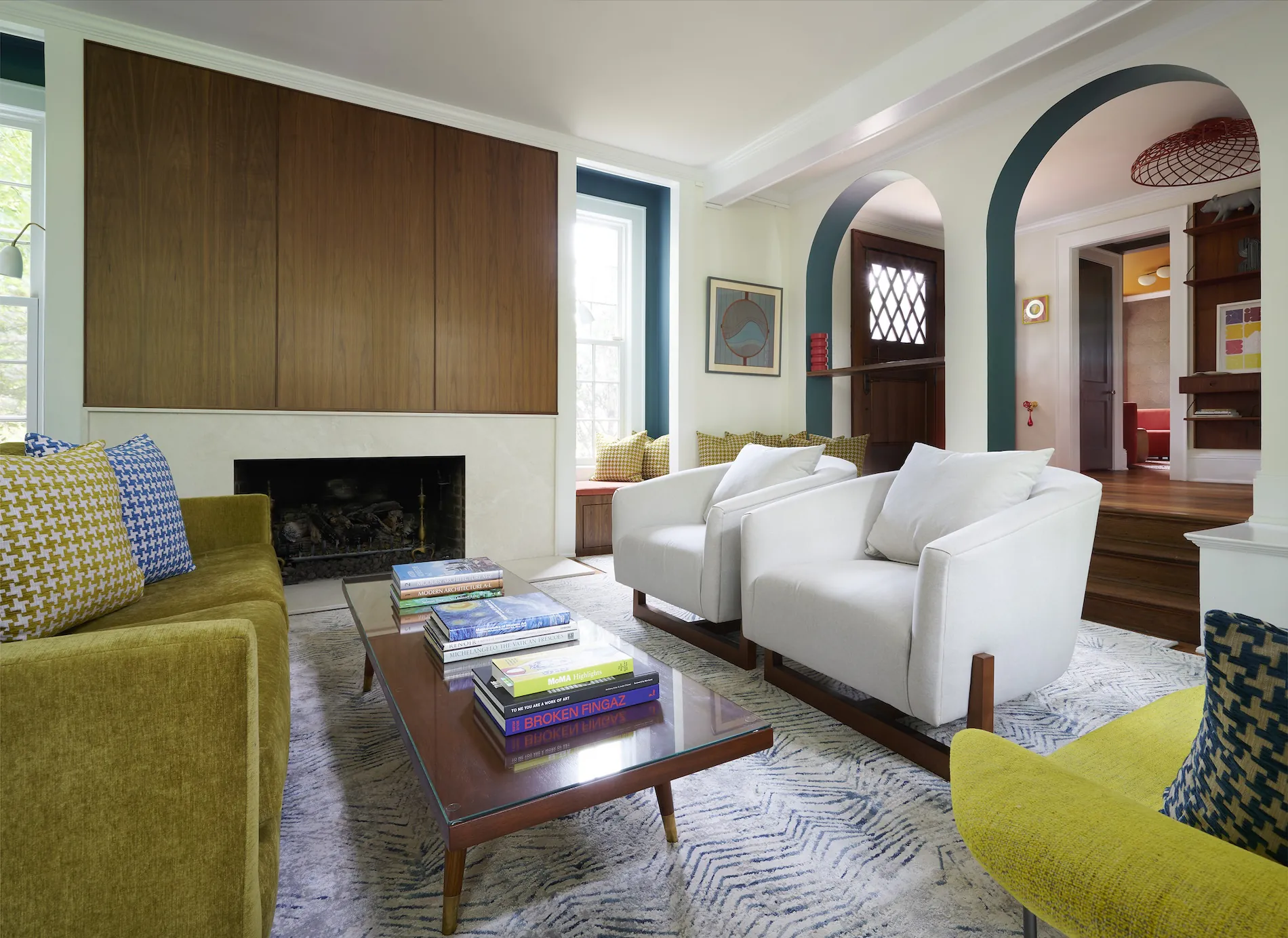
A Maplewood home designed by Walden Interiors was recently featured in NJ Home Magazine, highlighting the firm’s ability to thoughtfully integrate modern design within the architectural character of Northern New Jersey homes.
Read the full NJ Home Magazine feature →
Frequently Asked Questions
Start with directories like Houzz, Architectural Digest, and local Google listings to build a shortlist. Then focus on designers with clear renovation experience, trade coordination capability, and examples of work in homes similar to yours. Selecting based on operational expertise matters more than popularity alone.
Look for a designer with local renovation experience, strong contractor coordination systems, transparent pricing models, clear communication, and documented experience managing full projects from design through installation.
Two to three designers is ideal. This allows you to compare not only portfolios but also communication style, project management approach, budgeting transparency, and comfort level working together.
No. Style matters, but workflow matters more. Poor project management can cause budget overruns, delays, and unfinished spaces even if the initial concepts look appealing.
For renovation-driven projects and older homes, local designers generally perform better because they understand building infrastructure, municipal processes, contractor networks, and delivery logistics unique to the region.
The best time is during the planning phase, before making purchases or starting construction. Early involvement prevents layout mistakes, incompatible purchases, and scope creep that increase total costs.
Hourly consulting works well for guidance on layout, color, or furniture selection when you intend to manage your own trades. Full-service design is better for homeowners who prefer one coordinated team handling sourcing, scheduling, purchasing, and installations.
Yes. A core function of experienced designers is budget planning and scope prioritization. The right designer helps allocate spending where it creates the most impact while controlling unnecessary upgrades or decorative overreach.
Conclusion
Choosing the right interior designer in New Jersey is less about finding the most visible name and more about selecting a professional who understands the realities of your home, your lifestyle, and your project complexity. Experience coordinating renovations, managing trades, sourcing furnishings, and navigating local conditions ultimately determines how smooth and successful your project will be.
With the right evaluation process and the right design partner, your project gains not only beauty but also clarity, confidence, and long-term value.